

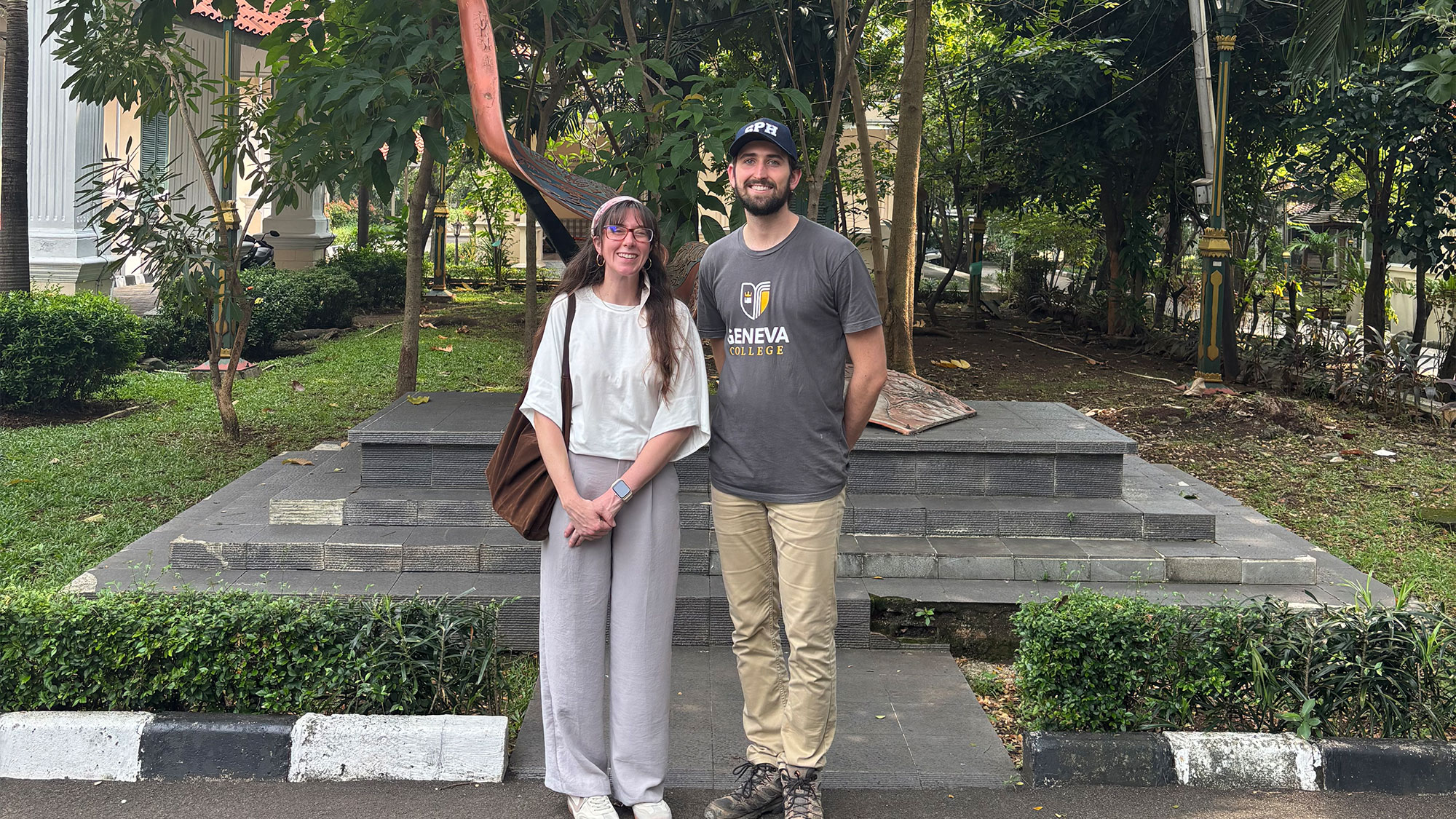
“A step of faith, a walk in the dark … I’m not necessarily confident about it, but why not? Let’s see what happens.”
Many at Geneva remember Kevin Arseneaux ‘25 as the star cross-country and track athlete. Kevin recalls Coach Phil Thompson saying during his campus tour that not only would he get the opportunity to run and get a college degree at Geneva – he would learn. Not only to be ready for a career, but to be ready for life.
True to Coach Thompson’s word, Arseneaux found that God grew him, matured him, and prepared him for something new beyond his time on the track and his studies after graduating in the spring of 2025.
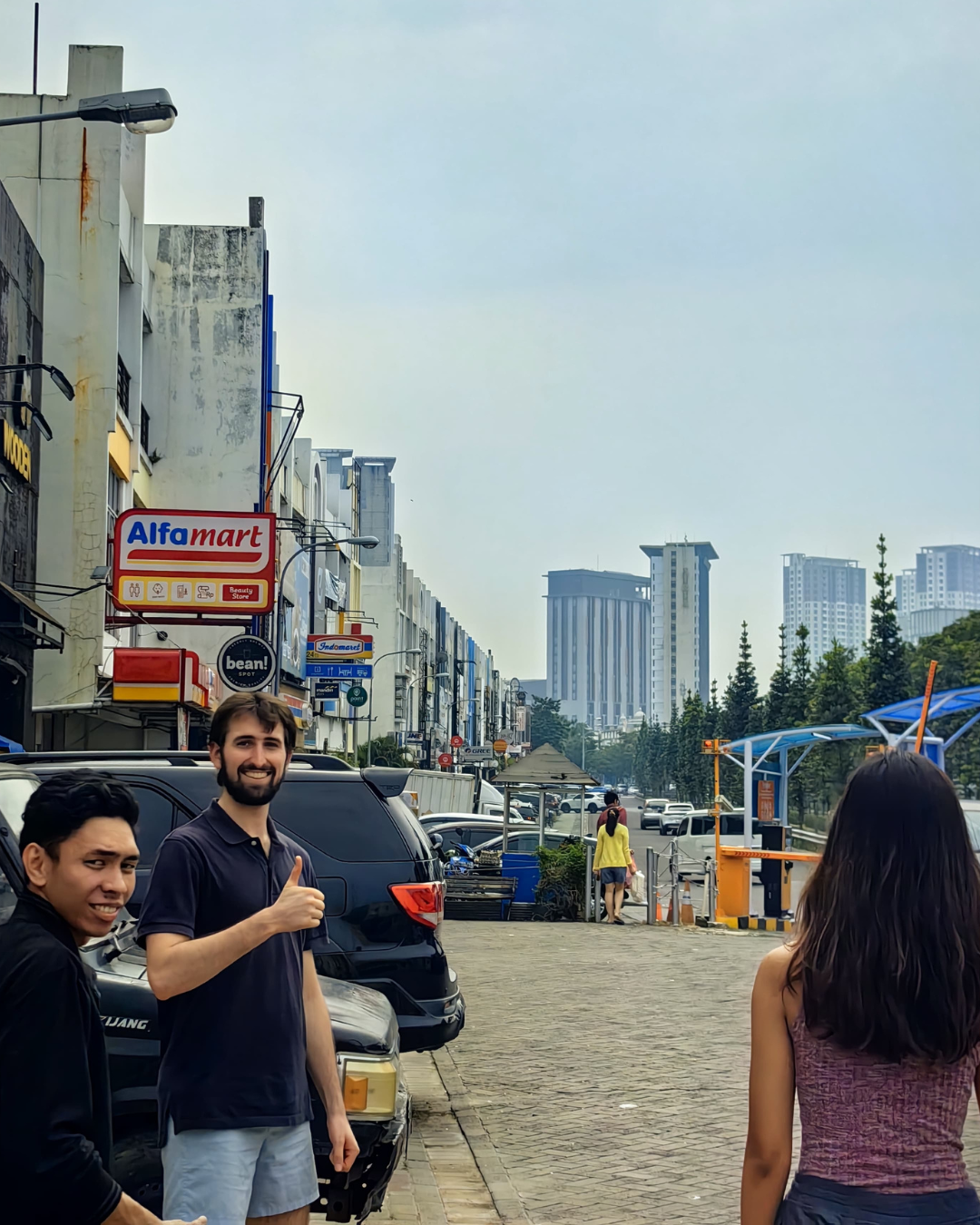
That something new was Sekolah Peleta Harapan (SPH) in Jakarta, the capital city of Indonesia. SPH is a group of five international Christian schools across the Jakarta region, rooted in the reformed tradition. The foundation that supports the schools is deeply invested in Christian education across Indonesia, educating approximately 25,000 students across almost 50 schools. The school teaches as many people as there are total in Kevin’s hometown, which is three times the population of Geneva’s own Beaver Falls. This is unsurprising as Jakarta boasts the largest city population in the world: 40 million people. SPH specifically searches Geneva for teachers for their schools on a near yearly basis.
“I heard about [SPH] and met with them when they came [to Geneva.] Dr. Cole sat me down and just really encouraged me and said, ‘I don’t know if you have plans for next year yet, but … I just think you would be a great fit.’
“And at that point, it was the end of fall semester, my fourth year. And I was like, you know what? A step of faith, a walk in the dark … I’m not necessarily confident about it, but why not? Let’s see what happens.”
Kevin took the leap of faith to SPH Lippon Village to become a seventh-grade teacher and track coach.
Kevin admits that the first six months were tough. He was a first-year teacher in a city with more people than there are in the entire state of California. It was also his first time living on his own.
“[In] high school, I’m a kid. And so everything’s provided for me. The only thing I did growing up was pouring my own bowl of cereal in the morning, right? And then I go to Geneva and I’m a student athlete and I eat like a racehorse. So thankfully, Alexander Dining Hall is an open buffet. And then I came here, and I’m by myself.”
While this is a common experience for recent college graduates, living in Jakarta gave it an uncommon quality for multiple reasons. The same foundation that runs the SPH school also created a haven within Jakarta for their teachers and international college students.
“I’m in a very unique culture within a unique culture. … Where I am is this really nice, mini-city. … There is waste management, and there is water management, and I can use my tap water to brush my teeth, and I can even get away with washing my vegetables … but if I were to leave this very controlled, nice, mini-city, you can’t just enjoy water from the faucet.
“And I’m receiving a salary that is comparable to the starting salary of a teacher in the United States. Because of that … quite literally … my salary in Indonesia makes me a rich person here.”
That allowed him uncommon choices for a recent college grad. He could afford to eat takeout every night and hire a cleaning staff. It’s a dream situation for many, but Kevin’s experience at Geneva made him choose a different option.
“I resolved that I don’t want to get into takeout culture. … I resolved, especially as a man who’s living on my own, that I want to learn how to take care of a home, I’m going to cook for myself. … And for $40-$50 US dollars, I can buy enough food for not only myself, but to host multiple gatherings of four or more people a week. …If you’re a good steward, you can be a real blessing to people here.”
Kevin was reading Liturgy of the Ordinary: Sacred Practices in Everyday Life by Tish Harrison Warren, saying, “It’s this really amazing book that talks you through how even the most basic aspects of life that we often think are ordinary or mundane are actually filled with meaning, and are actually the places that God wants to meet us.”
He thought, “I’m gonna buy ingredients. I’m gonna prepare food every night, and I’m gonna do the dishes. I decided I’m not going to outsource my cleaning. I’m going to learn how to take care of my home. And that takes time.”
He did this all with the intent of opening his home to give the same hospitality he had experienced as a student at Geneva and a member of the College Hill Reformed Church next to campus.
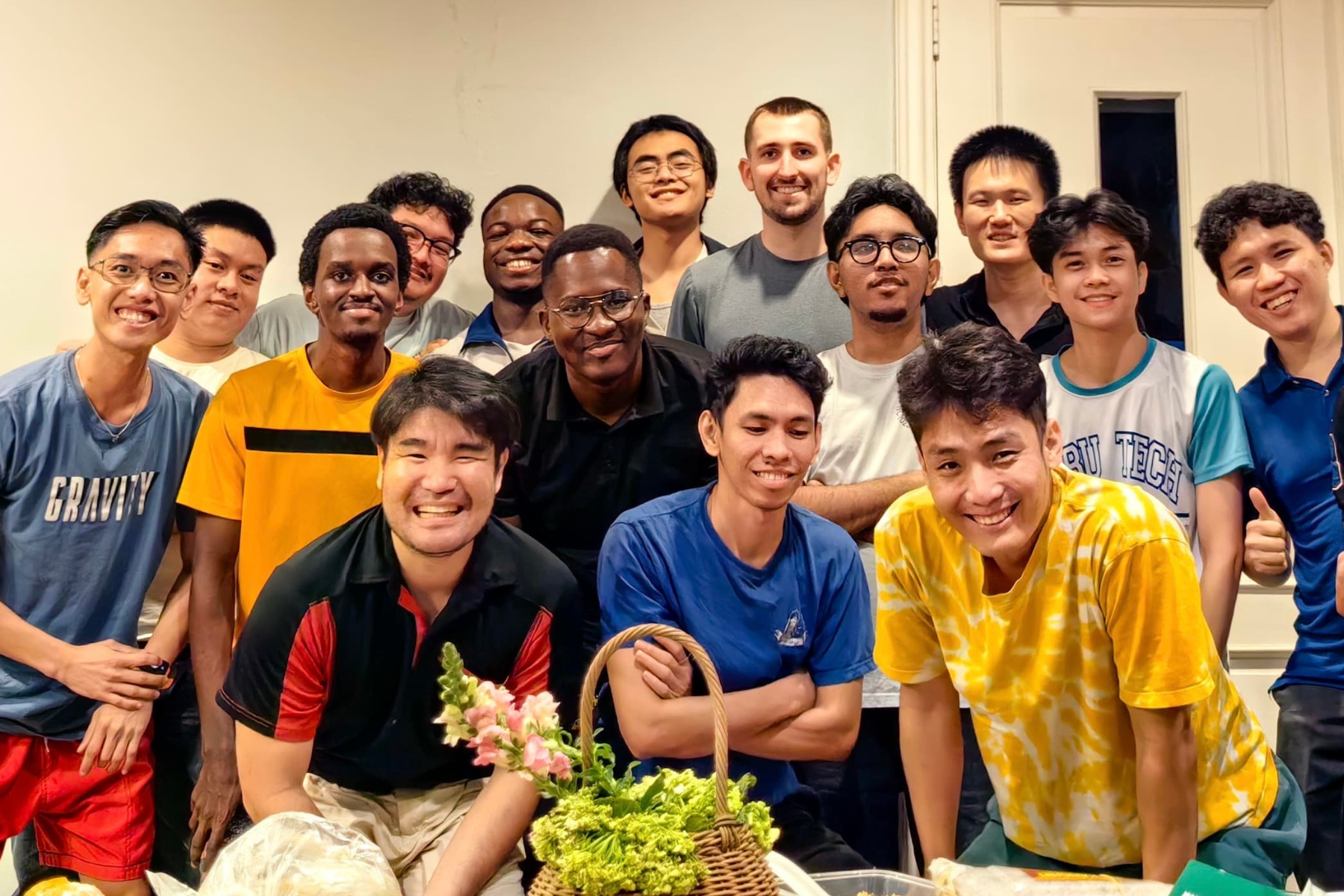
“Table fellowship is just a normal thing [to me]. It’s not an extraordinary part of life to just have people in your living space and to cook for them and to hang out and to sing and to just be together, right? To me, that’s just what Christians do. But for some people coming here, it’s an extraordinary thing. It makes it almost special. And I’m surprised because it’s just the way people did life, you know, in my time at Geneva.
“[It] was really hard to do at first because when I first came here [to Jakarta], obviously I was starting a new job and I was just really, really swamped with everything. And just opening up my living space that first month or two was just a really daunting task that I didn’t really feel like I had the bandwidth to do. But once I kind of got more grounded and on my feet and got into a good routine, now having people over isn’t even a burden. It’s not emotionally exhausting. It’s not draining. It’s just a normal part of my life. My door is open.”
Kevin often opens his doors to students attending the foundation’s international teachers college, members of his new church Karawaci Presbyterian Church, and the international professional Bible study he’s now a part of. The posture of generous hospitality allowed him to make new friends and build a new community locally, one where they engage in the type of community described in Acts 2:46b, “They broke bread in their homes and ate together with glad and sincere hearts.”
There were some other elements in Jakarta that were surprisingly the same.
“Something I can assure you is that a twelve-year old is a twelve-year old, no matter where you are on earth.”
Kevin experienced the same challenges a teacher in America would. One was addressing students who feel anxiety to achieve high levels of academic success, tying their worth to their performance.
“I try to challenge [that] narrative. Something I tell my students before they take a test is that I’m more concerned about you meeting your full potential than you getting a particular outcome. You know, I am more excited about a student who earns a low percentage who is using their talents faithfully and is meeting their full potential, than the student who in appearance does excellently because they get a high score, but they’re squandering their talents and they’re not actually reaching their full potential.”
Kevin also experienced some culture shock.
“…Even just the way [American] systems are set up, whether it be traffic laws or infrastructure. There's a lot of things that we would look at and say, ‘Man, this is so inefficient.’ The problem, I think, it’s to the point where we [Americans] almost feel like we’re entitled to [a fast pace].
“Whereas people [in Jakarta] just don’t [always] feel this internal pressure to have to be so productive all the time. And so they just work slower and they’re perfectly okay with that.
“[At] first, I was frustrated.”
Kevin experienced an internal shift over the course of his first six months.
“I think it’s just been God working on my heart, honestly, and Him giving me the humility to say … I’m not here to impose my assumptions, my [cultural] mores, right? I’m a guest here. I’m a visitor here. … But if I just live my life looking for things to be frustrated about, I’m just always going to have a problem. So I can either get stuck in that or … be patient. That took time.
“I don't often get frustrated anymore.”
Kevin found elements of the various microcultures within the most populated city on earth to deny or embrace on his walk in the dark on the other side of the world.
“I think a really big thing for me has been the liberal arts curriculum at Geneva, specifically the humanities curriculum prepared me to take every thought captive out here.”
Humanities courses, along with Bible, are a part of the unique common core classes every Geneva student must complete.
“I’m able to go into a new culture and see the way things are and I am able to evaluate culture … because I had a very rich humanities exploration where I was taught how to evaluate the philosophies that are undergirding that culture at Geneva.
“So coming into [a] culture, if I’m not wise, and I just assume everything’s neutral, I could end up actually adopting patterns of life that are actually detrimental to my overall health as a human. And maybe God has something better for us.
“[Humanities classes] coupled with Geneva biblical education because, you know, the Scriptures provide our actual standard for how we’re actually making those decisions. The humanities curriculum equipped me with the philosophical tools to evaluate culture which is then coupled with the Scripture that is actually guiding me as a I make decisions of wisdom within the culture.
“And something I do really want to emphasize, throughout all of that, is that all of this Geneva education is being supported by the local [College Hill Reformed Presbyterian] church. … And that’s actually why Dr. Troup always tells the students at convocation: find a local church. Find a local body of believers that you are gathering with. Geneva was as amazing as it was for me in part because of the presence of the local church in my life scaffolding and supporting and enhancing the education I was actually getting at Geneva. So that’s something I really want to mention as well.
“… I also learned as I grew in my faith at Geneva, I realized that ultimately faith is not about myself. The story that I’m a part of, which we know from the Scriptures, God’s story is ultimately about the nations of the world.
“…[I] didn’t really feel like a particular calling to a particular place. I was really and still am really open to international work and even pioneer missions to unreached people groups. And so, with that being said, when the opportunity to teach at SPH came up, it checked a lot of practical boxes.
“So… yeah, why not? A step of faith, a walk in the dark…I’m not necessarily confident about it, but why not? Let’s see what happens.”
Throughout this experience in Jakarta, Kevin gained profound insight in calling.
“And to take that and run with that a little bit more: that’s actually God’s calling. We always get so worried about calling, right? ‘What is God’s calling on my life?’ And what I’ve learned is that, first off, God’s first calling on our lives is to Himself. And He does that through our sanctification. And He works out our sanctification in the nitty-gritty of life, in the people that are in our immediate lives, in the work that He has prepared for us in this season, in all of those chores and tasks and things that we think are mundate. That’s where God promises to meet us, and so it’s in those things that we’re going to meet Him and encounter Him and be changed by Him. I think part of my experience here has been my maturity of just coming to a place where I’m not worrying, thinking, trying to figure out, ‘What is God’s calling for me?’ I know what it is. I have it. It’s right here, right now.”
Coach Thompson was right when he first talked to Kevin those handful of years and a lifetime ago, Kevin concludes: “Geneva has been a blessing for me … and prepared me for life.”
The Geneva Story publishes content from a variety of contributors across the Geneva College community. The perspectives, experiences, and conclusions expressed in this content are those of the individual authors and do not necessarily reflect the official views of Geneva College, its leadership, or its editorial staff.
Misty Mator
- Misty Mator '24 is a digital storyteller at Geneva College.
- View author





Recent Articles
Geneva Professor Develops Framework for Digital Discernment in Christian Education
Strength Training for the Soul: Geneva’s Summer Fellows Program
A Closer Look: Can I Afford College?
Welcome to Geneva: Move In Day 2026
A Closer Look: Is College Worth It?
Announcing a New Agreement with Reformation Bible College
Storyteller Sarah Brady to Present at Geneva
Lindsay Courteau Named Vice President of Strategic Partnerships and Government Relations
Attention as an Act of Faith
Faculty Awards Presented at the 2026 Academic Convocation