

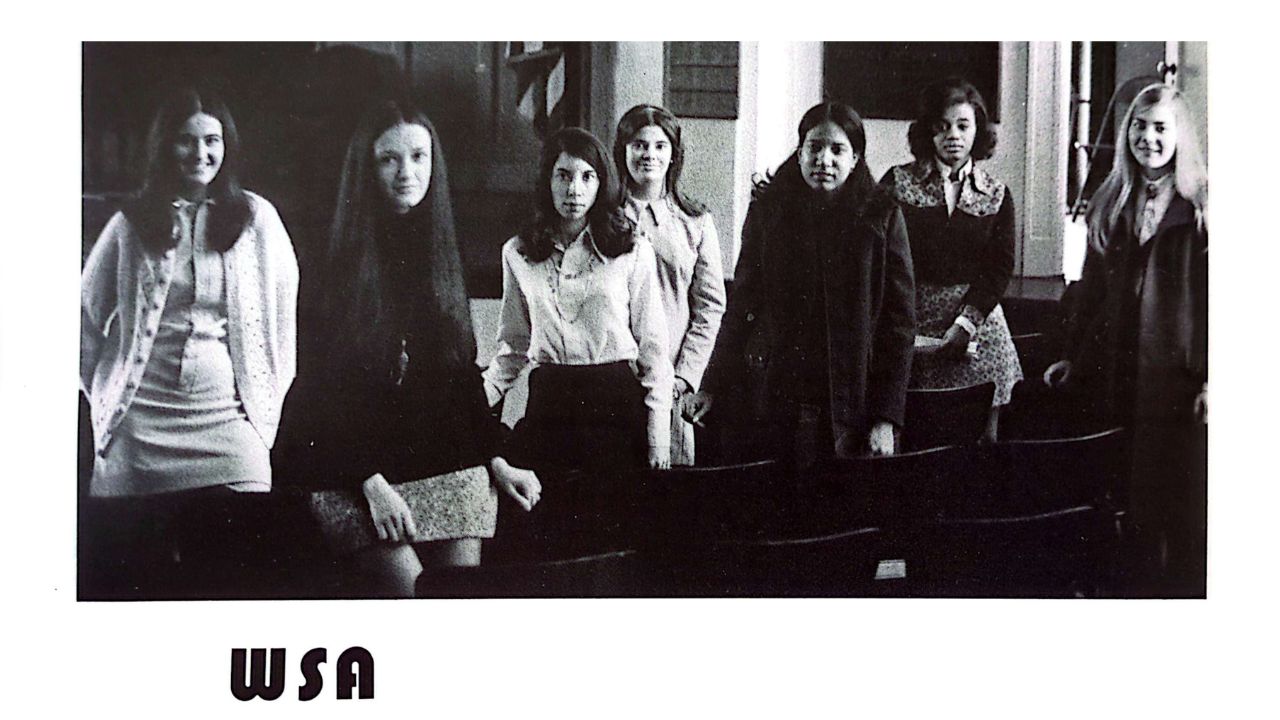
The 2026 Women’s History Month theme, “Leading the Change: Women Shaping a Sustainable Future” celebrates those whose work has laid a foundation for future generations. The Women’s Student Association (WSA) at Geneva, a club that spanned five decades in the 1900s, presented a framework for student events, scholarship, and thought leadership.
The WSA was a thriving organization at Geneva College throughout much of the 20th century. Every undergraduate female student at Geneva was automatically a member of the WSA. In addition, female faculty, wives of faculty, and alumni who wished to do so could become members. Through a variety of programming that ranged from notable guest speakers to parties and teas for all occasions, the WSA promoted a campus culture of hospitable community and growth-oriented friendships.
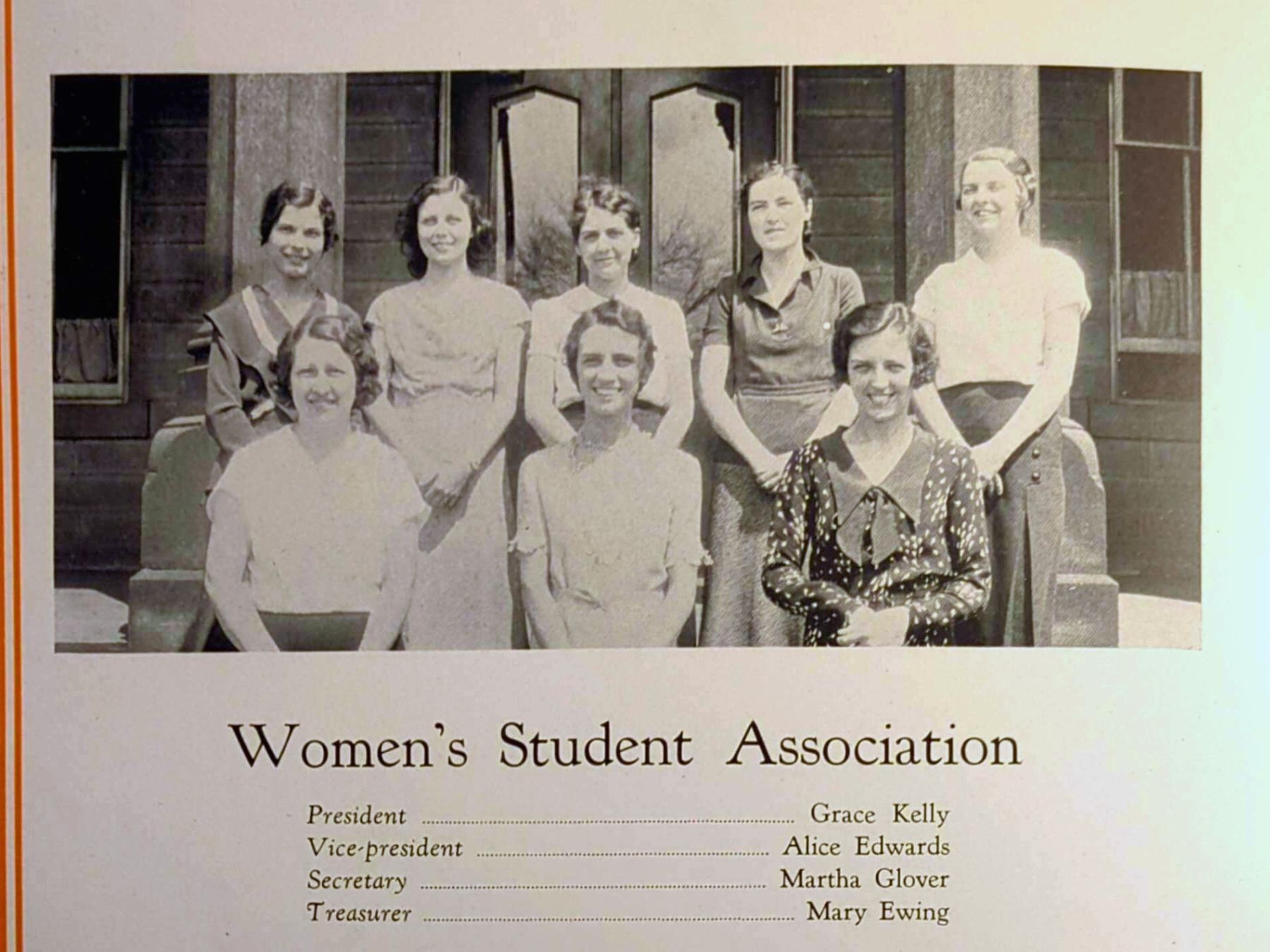
The earliest documentation of the WSA appears in their 1932-1933 Handbook and the 1932 Genevan — although the text implies that the organization was in existence for at least several years before that date. The purpose of the WSA as stated in their constitution was “to foster a spirit of unity and loyalty to Geneva and womanhood.” The foreword of the 1932 Handbook further explains that “the association sponsors many enjoyable social functions, which contribute to the happy and wholesome development of the student … and train [the women of Geneva] to live harmoniously and companionably.” The WSA was last featured in the Genevan in 1982.
Just a few of the events that the WSA sponsored regularly from about 1932 to 1976 included a Christmas Formal Dinner, a Spring Formal, a Mother’s Day Tea, a Halloween Party, and a Winter Carnival. The WSA’s annual Sadie Hawkins Hoedown took place in a Metheny Fieldhouse decorated with hay bales, with students in overalls, peasant dresses, straw hats, and bare feet. In its earlier years, it was a girl-ask-guy dance inspired by the cultural phenomenon of Al Capp’s comic strip Li’l Abner. According to the 1946 Cabinet, the evening’s risky refreshments included “Kickapoo Joy Juice and hog innards.” The event was still going strong in 1975, a year that included game booths at which students could throw a pie at their favorite professor.
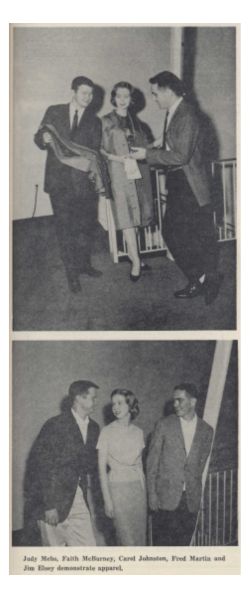
Another tradition of the WSA was the sponsored fashion shows. Funds from the tickets to these shows were put toward a scholarship that was awarded every year to a Geneva woman and described by the Cabinet as one of the most important projects of the WSA. An ad for the 1961 show encouraged students: “If you want to be another Jackie Kennedy or Adolphe Menjou; come one, come all to the WSA Fashion Show!” Eighteen students modeled the latest fashions for men and women, supplied by Taylor’s Department Store in Beaver Falls and with running commentary from Mrs. Gertrude Trobe of local station WBVP.
Not everything the WSA did was fun and games. In addition to raising funds for its own scholarship award, the WSA sponsored many charitable events to assist other community members. They coordinated an annual Christmas project, meant to gather money and nonperishable food items for needy families in the Beaver Valley area.
During the 1940s, the association hosted its Famous Women Series, inviting prominent female speakers to campus to give lectures on a variety of topics. Two of the most notable were famed pilot Amelia Earhart and Eve Curie, daughter of Marie Curie. Eve visited campus to lecture on “The Magic of Radium” in 1939, and also authored the book Madame Curie, which was sold for just $1.39 at the time at Reeder’s Book Store in Beaver Falls.
Other speakers were invited to discuss current world events around and after the time of WWII. These includes Mai Mai Sze, the daughter of a Chinese ambassador to the England and the US; Erika Mann, a foreign correspondent and news analyst who toured war-ravaged Europe in 1947; and Dr. Margaret Mead, an anthropologist who lectured on the reshaping of culture within Germany and Japan.
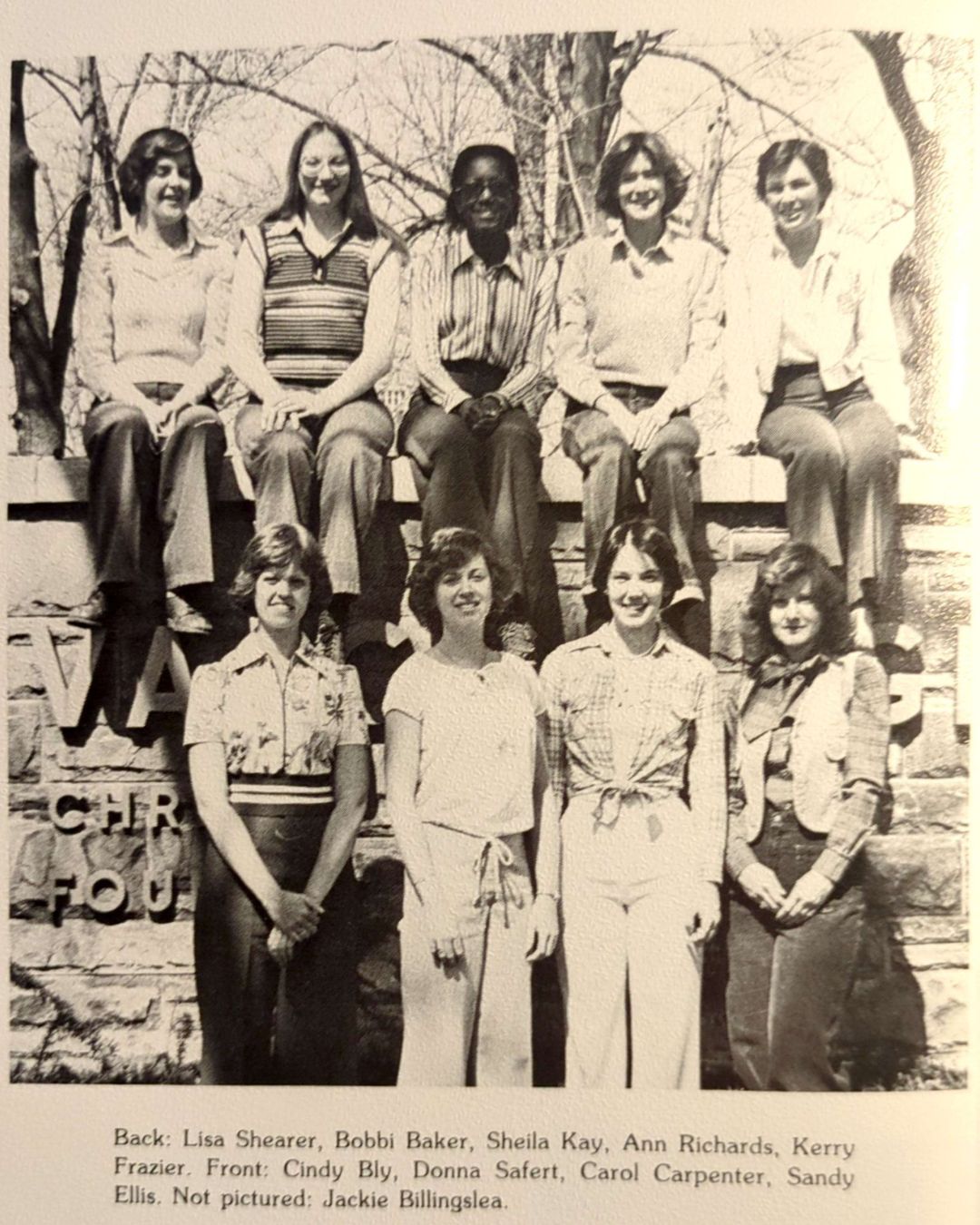
Perhaps more than anything else, the WSA was meant to add to a welcoming and engaging social atmosphere on Geneva’s campus, especially for female students. Patty Horn ’75, an officer in the WSA who studied English and French secondary education during her time at Geneva, reflects on being a part of the association.
“My time as an officer in the WSA led to really nice friendships. I was a commuter student, so my exposure to other students was in the classroom for the most part. The WSA gave me a way to get involved on campus and get to know other female students better.”
The event that the WSA hosted that was most memorable for Horn was the Christmas candlelight service in the chapel of Old Main. The service was held annually from at least 1971 to 1973, with Horn helping to direct a volunteer choir in 1973. The service included Scripture readings, vocal and instrumental solos, the reading of creative pieces, and — in 1972 — a short message by J.G. Vos. Attendees were given a small candle, representative of Christ as the light of the world, which was lit for the singing of Silent Night at the end of the program.
Horn summarizes, “The takeaway for me was that the WSA was trying to make the experience at Geneva a Christ-centered time and a time for individual growth.”
While student organizations like the WSA come and go, the contributions of many female students who were involved in its work helped to shape the life and culture of Geneva College for approximately five decades — and well beyond, as this little piece goes to show.
Historical information sourced by Kae H. Kirkwood '83, Geneva College Archival Librarian.
Header image: The WSA club photo from the 1972 yearbook, The Genevan.
The Geneva Story publishes content from a variety of contributors across the Geneva College community. The perspectives, experiences, and conclusions expressed in this content are those of the individual authors and do not necessarily reflect the official views of Geneva College, its leadership, or its editorial staff.

Reagan Shields
- Reagan Shields '26 is a former communication and political science student at Geneva College and a former writing intern in the Office of Marketing and Communication.
- View author
Tags:
ArchivesArchives






Recent Articles
The Trinity Psalter Hymnal: A Ministry of Song
Matthew DeGraaf: Leading Through Service
First Phase of Brig Renovations Completed
My Vision For Commuter Life
From Data Centers to Water Policy: One Student's Journey of Discovery
Mark Taylor Presents Love, AI, and Speaking for Yourself
Coping With Homesickness in College
Junior Sydney Schmied Publishes Her First Novel
Professor Emeritus James Gidley Honored at Orthodox Presbyterian Church General Assembly
A Closer Look: How Do I Know What College is Right for Me?