

One of the most influential English writers of all time is undeniably William Shakespeare. Because of his fame, many of the influential places in his life have been either preserved or rebuilt to replicate the conditions he once lived in. If you go to London, you can watch a Shakespeare play be performed in a replica of the Globe theater in the same style that Shakespeare’s company, the King’s men, used to perform.
Take a train ride north to Shakespeare’s hometown of Stratford-Upon-Avon, and you can find Shakespeare’s birthplace, a 16th century building that is quite well-kept. You can even take a tour of it with guides in period accurate garb who explain the lifestyle of the period William Shakespeare grew up in. You can take a walk down the Avon River and arrive at the Holy Trinity church, where Shakespeare was baptized, married, had his children baptized, and eventually was buried. Walk a few blocks up from there, and you can find his old schoolroom and guildhall, where tours again are given. His classroom is still used by children each day.
But, if you wish to go across the street to see Shakespeare’s “New Place,” the large house he purchased after gaining success in London, you will be sorely disappointed, because the building no longer exists. The reason for this, oddly enough, lies in the fate of a famous mulberry tree that Shakespeare planted in the courtyard of his house.
Shakespeare and the Purchase of New Place
For some background, Shakespeare was born in 1564. As a child, Shakespeare had the privilege of going to school, and he would walk by the huge house every time he came to and from school. As the story goes, Shakespeare would tell his friends that when he became rich, he would buy the house. Shakespeare would eventually move to London and became an actor and a playwright, eventually rising to fame in the 1590’s. Eventually, Shakespeare went back to his hometown of Stratford-Upon-Avon, and wanted to have a house that fit his distinctive character as a successful playwright. So, in 1597, Shakespeare’s childhood wish was granted, and he purchased the New Place.
The King’s Mulberry Scheme
If you know about mulberry trees, you might realize some interesting inconsistencies in this story. To begin with, mulberry trees are native to south Asia, not Europe. So why would anyone go to such lengths to import a mulberry tree all the way to England? Well, it actually was the English King’s idea. Mulberry trees happen to be the primary food of silkworms, which, of course, produce silk, a very lucrative business. So, King James I of England, between the years of 1607 and 1609, imported hundreds of mulberry trees to England hoping to start a silk industry to rival the industries of France and Italy.
Unfortunately for King James I, he made a crucial error. There are two main kinds of mulberry trees, a black and white variety. Silkworms only eat from white mulberry trees. As it happens, King James I shipped over hundreds of black mulberry trees. So, while these mulberry’s could help one make a delicious pie, they attracted no silkworms, and hence, no silk trade was started in England.
Shakespeare’s Mulberry Tree at New Place
After Shakespeare purchased the house in 1597, Shakespeare owned the house until his death in 1616, meaning that he would have owned the property during King James I’s importation of mulberry's. Later evidence shows that a mulberry tree was planted in the New Place around the time that James I was importing them. This can only mean that Shakespeare either planted it himself or ordered it to be planted.
From there, the myth of Shakespeare's mulberry tree was born. The story is simple. Shakespeare planted it himself and, inspired by the nature around him, he wrote many of his plays and poems under the shade of the tree. There is much debate between Shakespeare scholars as to how much time Shakespeare actually spent in his house in Stratford-Upon-Avon, as much of his business still happened in London. For a long time, it was assumed that Shakespeare didn’t spend much time in the New Place at all, but more recent investigations actually point toward Shakespeare spending a lot of time in his hometown house. While it is hard to tell how much time he spent under the mulberry tree, there is a lot of evidence that showed that Shakespeare had a remarkable knowledge of plants and nature, which comes out in his works of literature. In fact, across all his works, the number of plants mentioned totals to one hundred and seventy-five plants, including, of course, the mulberry tree.
Mulberry Trees in Shakespeare’s Works
It is worth mentioning the two points at which mulberry trees are mentioned, once in a A Midsummer Night’s Dream the other in Coriolanus, two incredibly different plays. Yet, in some sick foreshadowing, both are mentioned quite closely to death, albeit one of which is fake. In A Midsummer Night’s Dream, the mulberry is mentioned during a incredibly badly acted, and therefore hilarious, acting out of the double suicide of two lovers Pyramus and Thisbe. The line is
And Thisbe, tarrying in mulberry shade,
His dagger drew, and died.
A Midsummer Night’s Dream Act V Scene 1
On the other hand, Coriolanus is a tragedy about an arrogant Roman general, and in the work the mulberry is used as a metaphor for life, which, like a mulberry, is fragile, and, when it breaks, leaves a dark stain all around it. The line is used to describe Coriolanus’ life as,
“Now humble as the ripest mulberry
That will not hold the handling:”
Coriolanus, Act III scene 2
Meaning basically, be humble, since your life is as fragile as a mulberry that can break even just in your hands.
Back to the actual mulberry tree. Regardless of the amount of time he spent with the tree, the tree gained a sort of mythical status after Shakespeare’s death in 1616. Fans of Shakespeare would often visit the many Shakespeare sites, such as his home, the church he was buried in, and the tree as well. For many years, the owners of the New Place were okay with that.
The Myth and the Pilgrimage
After Shakespeare’s death, the house remained in the Shakespeare family until, in 1670, his last remaining granddaughter Elizabeth Barnard died. As relatives of Shakespeare, they were happy to accommodate Shakespeare pilgrims visiting the tree. After Elizabeth Barnards death, the land ended up in the hands of the Cloptons, the family that originally made the house almost 200 years previous. The Cloptons also were not bothered by passing Shakespeare fans who would pay their respects to the poet at his tree. But eventually, the Clopton family line also died out, so the land was sold to one Reverend Francis Gastrell in 1758, a wealthy clergyman looking for land in the area.
Francis Gastrell and the Destruction of the Tree
As the story goes, when Shakespeare supporters came to Gastrell’s door, he got tired and annoyed. So, he decided, if there is no tree, there will be no visitors. So, Gastrell, with no regard for the legacy he was destroyed, cut down Shakespeare’s mulberry.
While Gastrell thought little of it, two reactions immediately ensued. First, wood carvers like Thomas Sharpe jumped on the opportunity to create keepsakes and toys out of the wood to sell to Shakespeare fanatics. Relics of the mulberry tree became as plenteous as the relics of the cross of Christ. Similar the relics of the cross, proving that any particular piece is genuine is basically impossible, but some possible pieces are still owned by the Shakespeare Birthplace Trust.
The more important reaction was one of outrage, by Shakespeare supporters and the people of Stratford-Upon-Avon alike. The citizens of Stratford-Upon-Avon were so enraged they attempted to find a way to pay back Gastrell, and after a look at the previous year's taxes, they found their reason. Gastrell had failed to pay taxes on the house. When he learned this, Gastrell, not to be outdone, found a loophole in the law code, which stated that land without property couldn’t be taxed. So, in 1759, a year after cutting down Shakespeare’s tree, Gastrell destroyed Shakespear’s house as well. This was the last straw for Stratford-Upon-Avon citizens, and Gastrell was practically run out of town. But the damage was irreversible.
Context and Complications
Before we come down too harshly on Gastrell, some other facts ought to be brought up. While Gastrell did fell the tree, the house that was around it wasn’t Shakespeare’s original house. John Clopton, the previous owner between Gastrell’s time and Shakespeare, had already demolished Shakespeare’s house which had belonged to Shakespeare and rebuilt a newer house on top. The newer design may have been the reason why Gastrell purchased the land in the first place, since it looked a lot like one of his other properties. Researchers also found out that the newer house had a smaller courtyard, meaning that the old gnarly mulberry tree probably have blocked out most of the sun, and even could have even been damaging the roof. The few Gastrell defenders use these facts as a defense, saying he wasn’t just an anti-Shakespeare grouch.
Decline, Archaeology, and Rediscovery
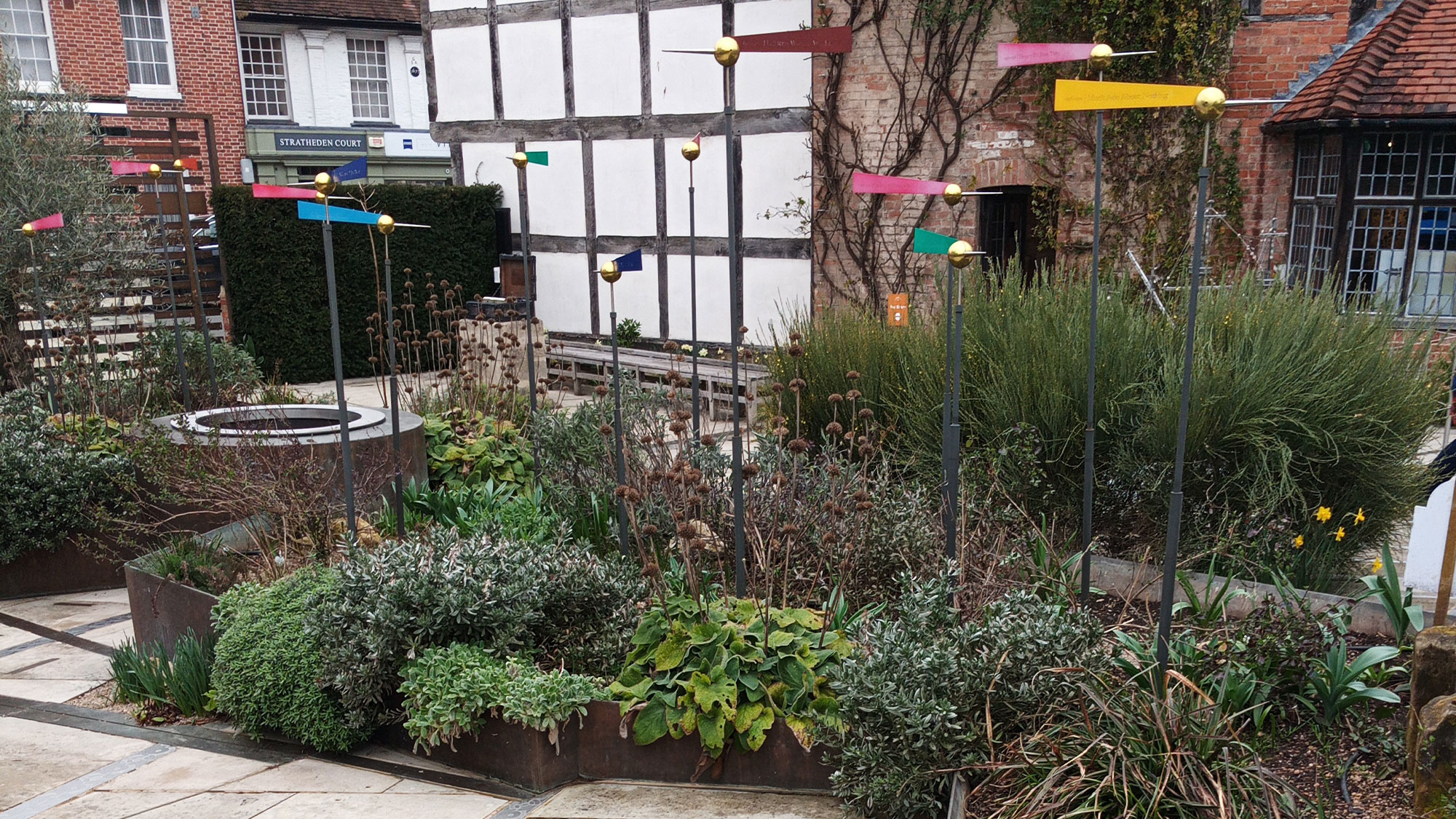
Regardless, the land wasn’t used much and changed hands a lot, eventually splitting into smaller plots. While the land was still recognized as the location of Shakespeare's New Place, no new buildings were created on it, and the area became a garden for the Nash house next door. The Nash house once had belonged to the husband of Shakespeare’s granddaughter Elizabeth, his last living ancestor. The Nash house and garden where the new place plot were eventually purchased by James Halliwell-Phillipps, an antiquarian and Shakespeare researcher, who would do archaeological research on the building in 1862 and 1863, work that couldn’t have been done if the tree, and house, hadn’t been felled. The land was eventually sold to the Shakespeare birthplace trust, who still owns it today. There have been other archeological searches, including Ernest Law’s in 1919-1920, and most recently in 2010-2012, called the Dig for Shakespeare. In 2015 and 2016 the Shakespeare birthplace trust created the exhibits and gardens that are there today, to remember and explain the rich history of the site. If you visit today, employees and volunteers of the Shakespeare’s Birthplace Trust tell the story of Shakespeare’s purchasing of the land and the story of Gastrell’s destruction of the tree and the building.
The Site Today and the Mulberry Legacy
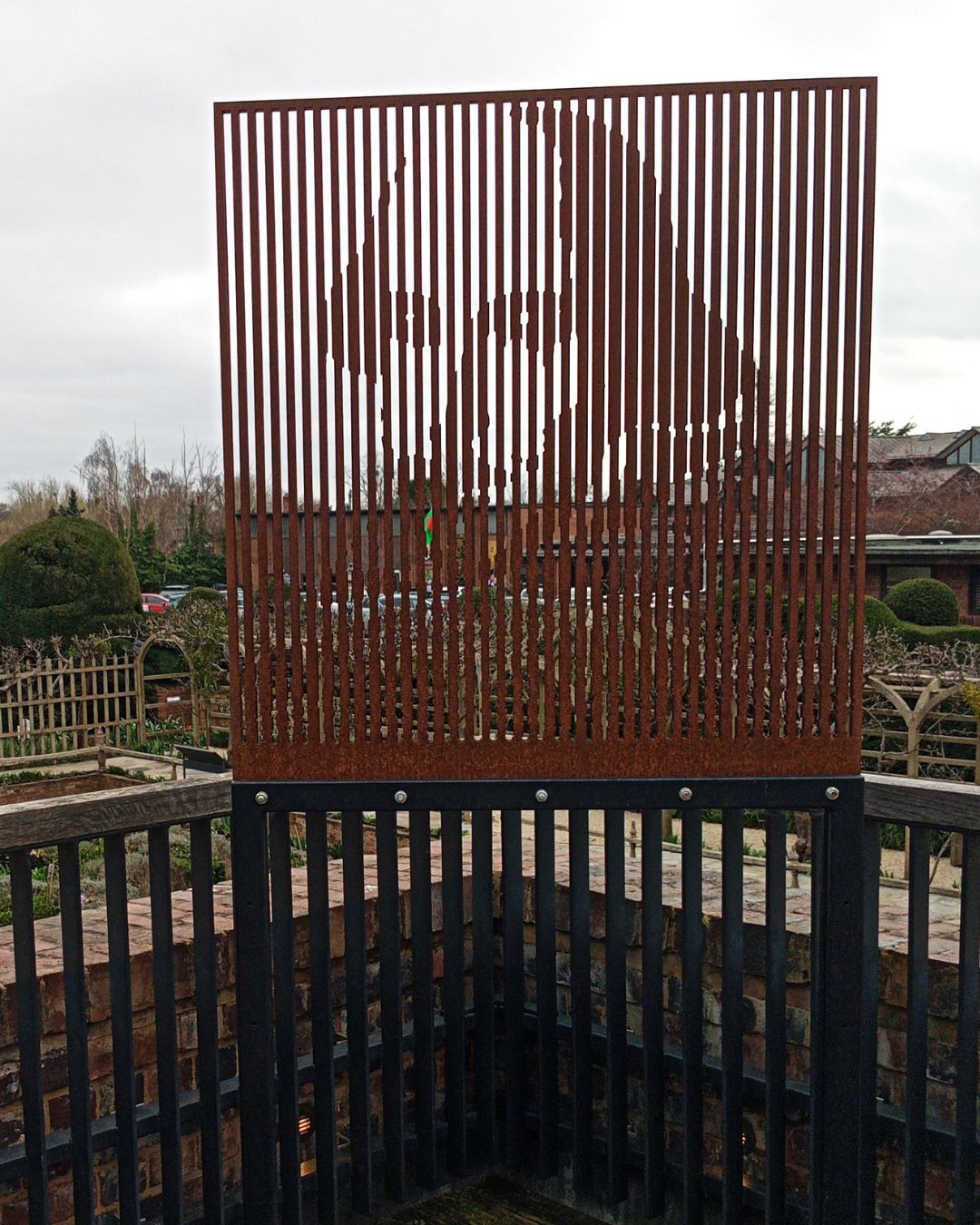
Today there are still two prominent mulberry trees on the site. One is quite old and said to be from a scion from the original. Whether it is planted from Shakespeare's original is up for contention, as is its actual age. The other mulberry was planted by British actress Peggy Ashcroft in 1969 in honor of Shakespeare. Fun fact, her ashes are also spread beneath the tree. The rest of the area is filled with a garden, as well as artwork and artifacts of Shakespeare, such as a metal globe symbolizing his worldwide influence, and his writing desk, an incredible artifact from his life.
Shakespeare Gardens Around the World
But the legacy of the Shakespeare’s mulberry tree didn’t just end there; mulberry trees have become the centerpieces of many Shakespeare Gardens. The concept of a Shakespeare Garden was to create a garden which had every, or at least a lot of the one hundred and seventy-five plants mentioned in Shakespeare's works. Each plant would have a plaque giving its name, as well as the passage of the play or poem in which the plant was mentioned. For example, a plaque next to some Holly would say:
Heigh-ho, sing heigh-ho, unto the green holly.
Most friendship is feigning, most loving mere folly.
Then heigh-ho, the holly.
As you like it Act II scene 7
The first Shakespeare Garden was created in 1916 (three hundred years after Shakespeare’s death) in New York City’s central Park. It was designed by Edmond Bronk Southwick, an entomologist and Shakespeare enthusiast. One of its centerpieces was, of course, a mulberry tree said to have been planted from a scion of Shakespeare’s original mulberry tree. While that claim was recently disproved, the concept was still a hit, leading to Shakespeare gardens popping up all across the U.S. and the globe, with ones in currently in the U.S., Germany, Canada, New Zeeland, and South Africa. These gardens celebrate Shakespeare’s love for nature, and but also show his deep knowledge of the natural world. These gardens attempt to emulate the natural world that Shakespeare was surrounded by, but the centerpiece of many of these gardens are mulberry trees, a symbol of how even if Shakespeare’s tree was destroyed, his effect on the world was, and is, still seen today.
The Mulberry Tree: A Story Like Shakespeare’s Own Works
In the end, the story of Shakespeare’s mulberry tree is a lot like the plays Shakespeare wrote. At some points, it is tragic, the way that not only was Shakespeare’s tree cut down, but also his house was torn down. The destruction of his tree and home deprive us of a rich history of Shakespeare’s life, and yet its destruction also paved the way for archeological digs which helped researchers discover more about Shakespeare's life.
In some ways, also like one of his histories, it was planted in the first place because of a King’s intervention, and Shakespeare’s own bloodline ending led to the house getting into the hands of its eventual destroyer. The story of the tree is incredibly historical, as history is often fraught with conflict and ill-planned decisions.
The story of the tree even has comedic parts, like how Gastrell was ran out of town, and how it led to the creation of Shakespeare Gardens which show the world the beauty of nature and honor Shakespeare’s legacy as an excellent author.
The story of the tree is one of wild recklessness, whimsy, and realism. It reminds us that truth can indeed be stranger than fiction. But at its core, the story of the mulberry tree reminds us of Shakespeare’s deep and fascinating knowledge about plants and gardens, which can be seen in so many of his plays and poems. Shakespeare gardens, which came out of the mulberry tree’s destruction, not only celebrate Shakespeare's accomplishments but also celebrate the very same thing Shakespeare celebrated in so many of his works, nature.
Header image: The garden at the New Place. Photo by Daniel Fry.
The Geneva Story publishes content from a variety of contributors across the Geneva College community. The perspectives, experiences, and conclusions expressed in this content are those of the individual authors and do not necessarily reflect the official views of Geneva College, its leadership, or its editorial staff.

Daniel Fry
- Daniel Fry '26 is a former history student at Geneva College.
- View author









Recent Articles
A Closer Look: Why Choose a Christian College?
Matthew DeGraaf: Leading Through Service
First Phase of Brig Renovations Completed
My Vision For Commuter Life
From Data Centers to Water Policy: One Student's Journey of Discovery
Mark Taylor Presents Love, AI, and Speaking for Yourself
Coping With Homesickness in College
Junior Sydney Schmied Publishes Her First Novel
Professor Emeritus James Gidley Honored at Orthodox Presbyterian Church General Assembly
A Closer Look: How Do I Know What College is Right for Me?