

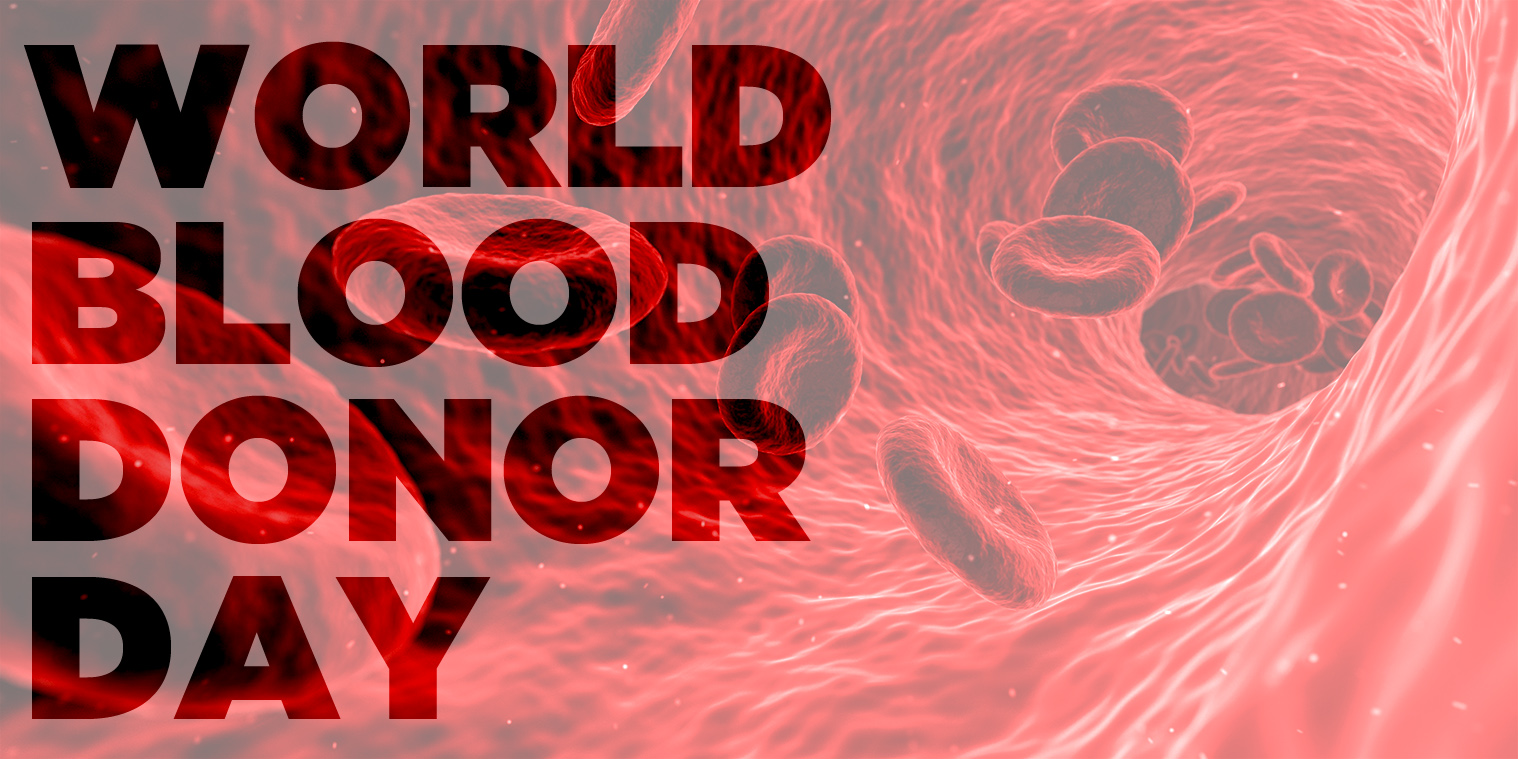

Have you ever donated blood? If not, Thursday, June 14, would be a great day to start. It’s World Blood Donor Day, and even though this year’s host country is Greece, through the Hellenic National Blood Centre, the event is celebrated worldwide. No need to travel to Athens to take part. You can donate right in your own backyard by plugging your zip code into the search tool at America’s Blood Centers.
Globally, World Blood Donor Day serves two primary goals, explains the World Health Organization (WHO):
- To raise awareness of the need for regular blood donations to ensure the quality, safety, and availability of blood
- To thank voluntary, unpaid blood donors for their life-saving gifts of blood and blood products for patients in need
WHO and other participating organizations hope to motivate people in good health who have never given blood to begin doing so, particularly young people: “The safest blood donors are voluntary, non-remunerated blood donors from low-risk populations.” If that sounds like you, read on for more reasons why you should donate blood.
1 pint = 3 lives
Blood is one of the most precious
Blood can’t be made artificially, and less than 10 percent of people eligible to give blood do so annually. Can you understand why there’s a constant need for regular blood donations by a sufficient number of healthy people? A decision to donate a pint of your blood can save a life, or even several lives if your blood is separated into its components — red cells, platelets, and plasma — which can be used individually for patients with specific conditions.
Life-saving transfusions
The American Red Cross explains that transfusion of blood and blood products helps save millions of lives every year. It also helps patients suffering from life-threatening conditions live longer and enjoy a higher quality of life.
Some of the needs for blood transfusion include:
- Women with complications of pregnancy, such as ectopic pregnancies and hemorrhage before, during or after childbirth
- Children with severe anemia often resulting from malaria or malnutrition
- People with severe trauma following man-made and natural disasters
- Complex medical and surgical procedures and cancer patients
- Regular transfusions for people with conditions such as thalassemia and sickle cell disease
- Making products such as clotting factors for people with hemophilia
Donating blood is a breeze
If you’ve got an hour, you can help save a life. The time it takes to actually draw the blood takes only about 8-10 minutes on average. Giving blood is safe and virtually painless. The supplies used to collect your blood are sterile and only used once. Does the needle prick hurt? About as much as a pinch to the underside of your arm, and only for a moment.
If you’re at least 17, weigh at least 110 pounds, and are in good health, you may donate blood every 56 days. “The plasma from your donation is replaced within about 24 hours, but red cells need about four to six weeks for
Donating blood on June 14 is a great way to care for your community by ensuring there’s always a sufficient, safe and sustainable blood supply available to those in need.
If you’d like to learn more about professions that enable you to serve wholeheartedly and faithfully in your life’s work or want to learn more about a biblically based, Christ-centered education at Geneva, we’d love to chat with you. For more information on how Geneva College can help you pursue your education goals, please phone us at 855-979-5563 or email https://www.geneva.edu/web@geneva.edu.
The Geneva Story publishes content from a variety of contributors across the Geneva College community. The perspectives, experiences, and conclusions expressed in this content are those of the individual authors and do not necessarily reflect the official views of Geneva College, its leadership, or its editorial staff.





Recent Articles
Your Geneva Education is a Gift: Nancy Pearcey Addresses 2026 Geneva College Graduates
By His Grace: Celebrating $40.8 Million in Faithful Generosity
Geneva College Names 2026 Life G Awardees
Remembering Professor Emerita Ann Paton
How Accessible Leadership Shapes Student Life at College
The Mountains Surround: Geneva Alumni Record the Songs of Ascent
6 Reasons a Geneva Education Stands Out From Other Christian Colleges
Cat Qi: Crossing Oceans, Growing in Faith
In Gifts and Trials: The Role of Prayer at Geneva
Reagan Shields: Equipped for Law School and a Lifetime of Learning