

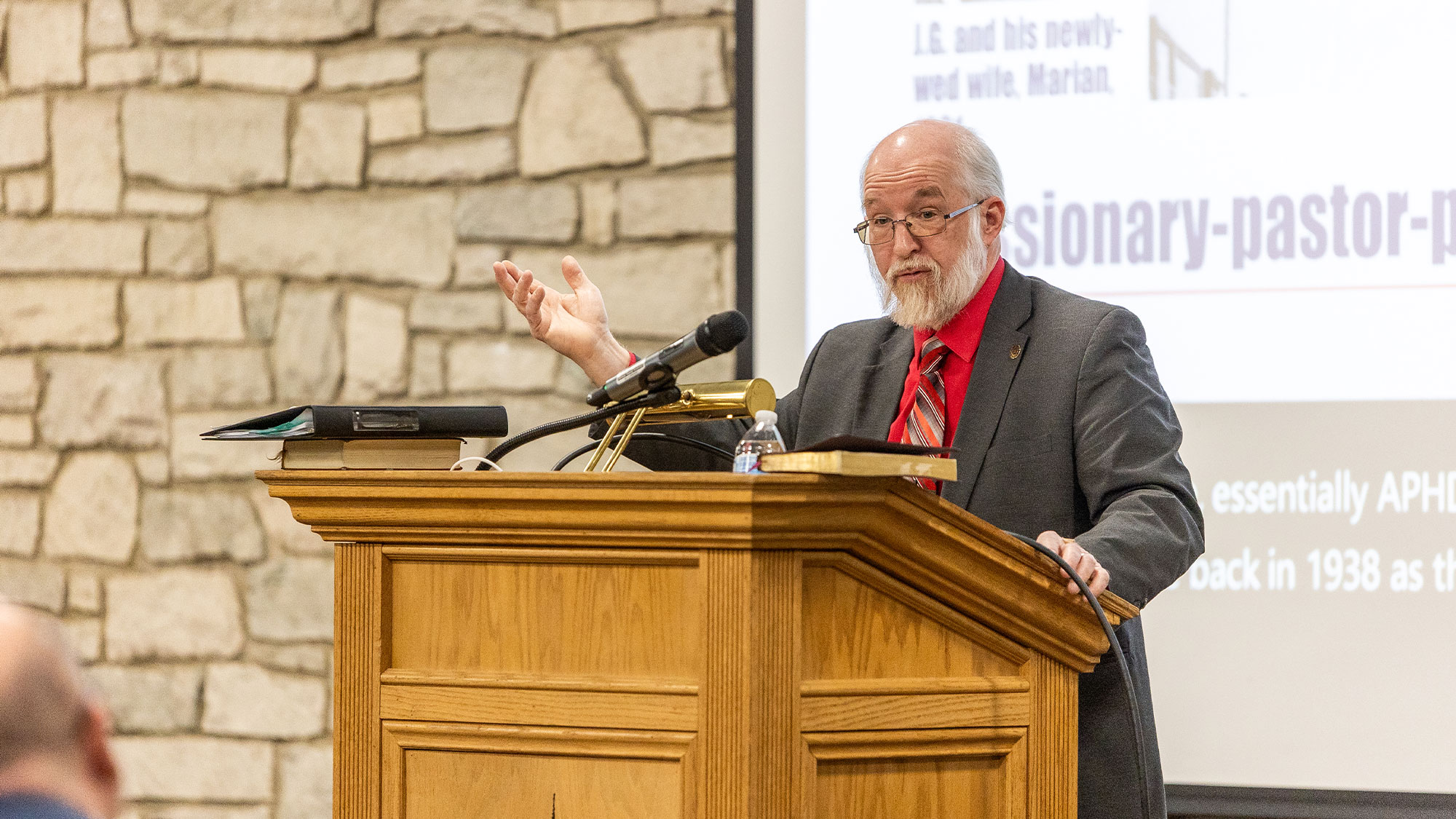
Byron Curtis, PhD, Geneva College professor emeritus of biblical studies, entered an international music competition hosted by the Digital Splitleaf Psalter project where participants were challenged to set the texts of the 1650 psalter to new music. On October 12, Curtis discovered he won. His winning composition will be performed by the Airdrie Reformed Presbyterian Church of Scotland on November 6 via livestream for its international debut.
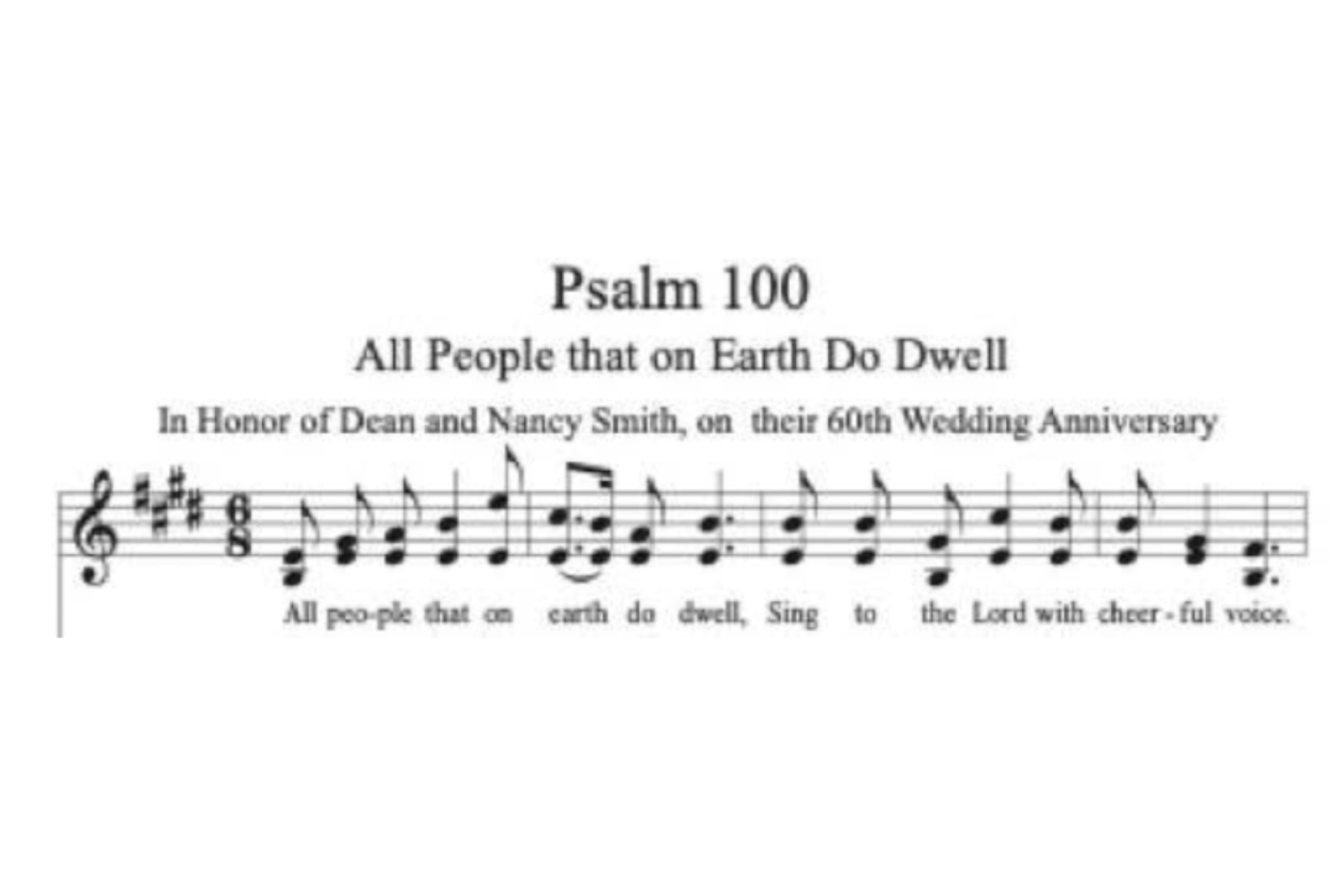
Curtis was introduced to congregational psalmody when he began attending Geneva as an undergraduate shortly after becoming a Christian. He says he thought at the time, “What? Congregations that harmonize? I was soon enthralled.” He began writing his own psalm-settings and has since had numerous ones performed by the Christian Student Fellowship Choir at Reformed Theological Seminary, The Genevans, and others. He states, “And so, for more than 50 years I've been composing psalmody for choirs and congregations.”
Curtis learned of the 2026 Digital Splitleaf Tune Competition from his former Hebrew teaching assistant, Geneva alum Rev. Brian Wright ‘11, who won third place in the competition.
Curtis continues, “On October 12 I learned in an email from Scotland that I'd won an international competition for new psalmody. When I read that news, I leaped out of my desk chair and shouted for joy. [My wife] Sue Ann came running to discover the cause of this happy ruckus, and she and I danced around the room.
“The contest was sponsored by University of Glasgow Senior Lecturer Tim Duguid and his "Digital Splitleaf Psalter" project, hosted by the Airdrie Reformed Presbyterian Church of Scotland. Tim's project seeks to advance psalm-singing world-wide, and to preserve the glory of the Scottish tradition of psalmody in the use of the 1650 Psalter. That book is one of the oldest complete musical Psalters in English. If you know Psalm 100 to the words, "All People That on Earth Do Dwell," you know at least a bit of the 1650. Some psalm books are published in "split leaf" form: that means there's a horizontal cut in the middle of each page, separating the music, printed above, from the words, printed below. The 1650 is often published in that method. Since nearly all the tunes and texts use the same metrical form, one can sing almost any text to almost any tune. In choosing a psalm to sing, the leader must designate both the tune and the text: singers can mix and match to their heart's content.”
As previously mentioned, Digital Splitleaf is an initiative dedicated to preserving the heritage of historic psalm singing while keeping it vibrant and active for future generations. The psalter contest was an outreach of that initiative and includes a performance of Curtis’s winning composition entitled New Jubilate set to the 1650 text of Psalm 100. The performance can be viewed via the Facebook or YouTube livestream of the Airdrie Reformed Presbyterian Church on Friday, November 6 at 2:30 p.m. – 4:00 p.m. EST.
Curtis concludes, “I hope that congregations and psalm-singing families will use it — and maybe even like it.”
The Geneva Story publishes content from a variety of contributors across the Geneva College community. The perspectives, experiences, and conclusions expressed in this content are those of the individual authors and do not necessarily reflect the official views of Geneva College, its leadership, or its editorial staff.

Misty Mator
- Misty Mator '24 is a digital storyteller at Geneva College.
- View author






Recent Articles
The Honors Program: A Thriving Community of Learners
Homecoming in Focus: 10 Photos That Capture the Weekend
Professor Emeritus of Biblical Studies Wins International Psalter Competition
A Closer Look: How Do I Practice Discernment in My College Search?
Professor Etheridge Featured on Youth Culture Matters Podcast with Walt Mueller
Housing 101: Making Geneva Your Home
Geneva Students Bring Workforce Challenges to the Pennsylvania Capitol
A Closer Look: How Do I Support My Student in the College Search?
Geneva's VP of Marketing and Enrollment Published in Comment Magazine
Geneva College Professor Mark Tronzo Honored Locally