

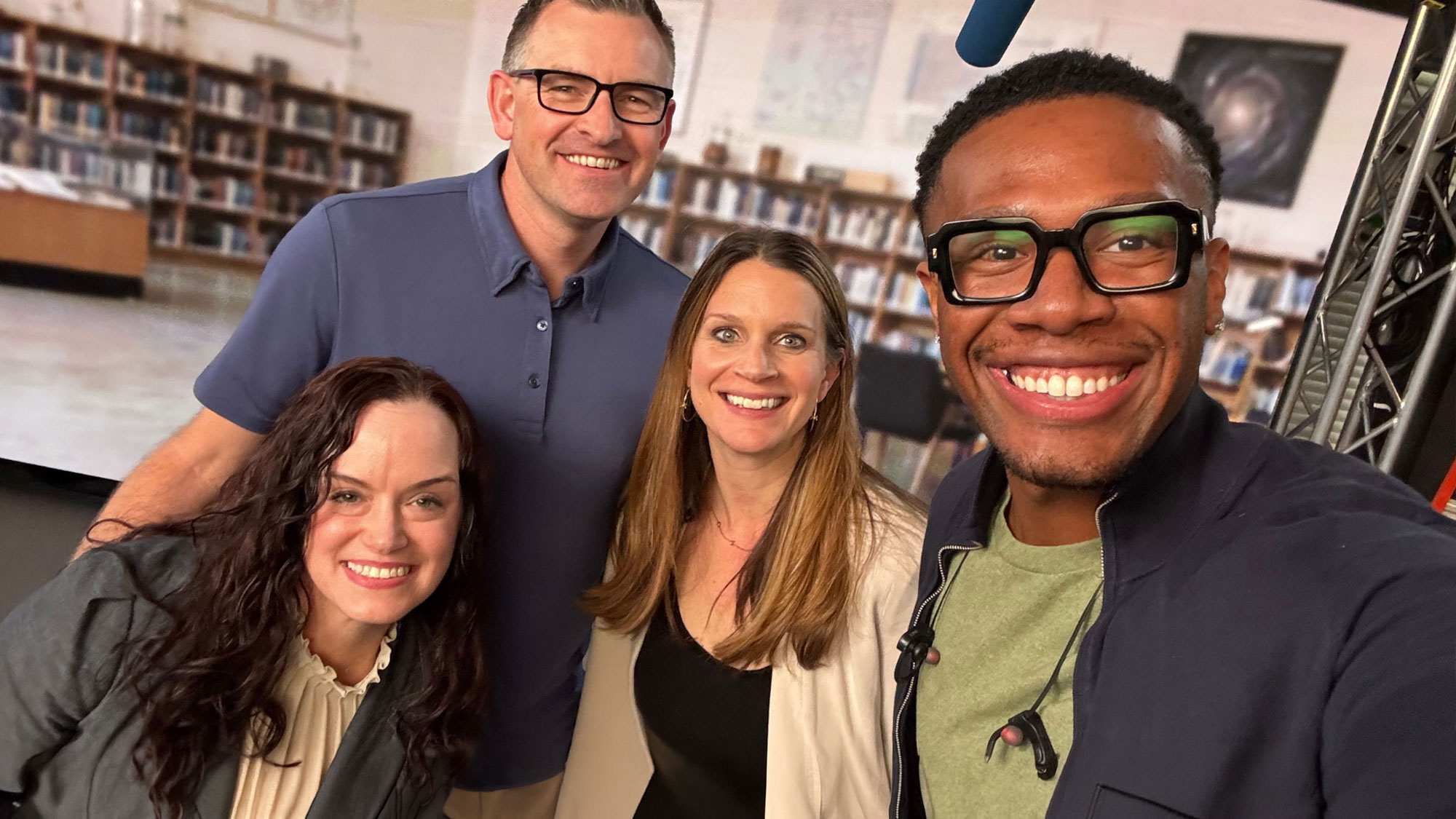
You might not believe it, but one of the current forefront ideas in Christian education started as a scribble on a napkin.
Deana Mack, PhD, Geneva’s professor of education and Education Department Chair, spent numerous hours in online meetings in the aftermath of the Covid-19 pandemic as did many others. One of those meetings was an International Community of Christian Teacher Educators (ICCTE) conference in May 2021.
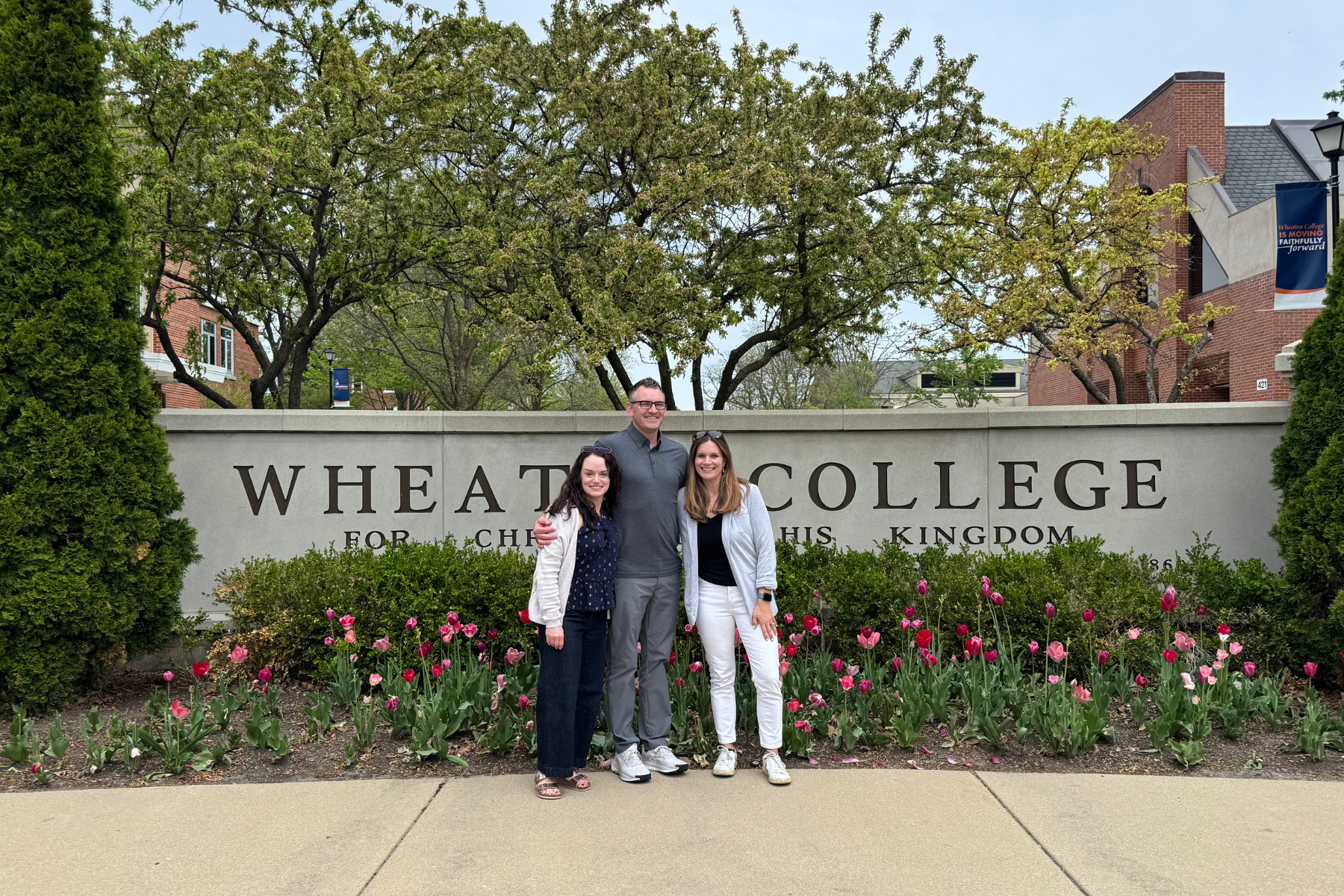
“I attended one of Dr. Carleigh Schoenleber’s conference sessions…and I asked whether she used the SAMR model. She said she had used it, but not for that particular presentation,” Mack says.
Dr. Randall King had attended the same session, was intrigued by the discussion Mack initiated, and wanted to know more.
“And so [King] found [Dr. Schoenleber and I] online and sent us and email, which was really amazing. And [the three of us] have been meeting online…and doing this work together since the summer of 2021.”
The SAMR model is the technology model of Substitution, Augmentation, Modification, and Redefinition developed by Dr. Ruben R. Puentedura. It is a tool that all educators can utilize to discern what digital tools meet their students’ educational needs. The work Mack, Schoenleber, and King do together is utilizing that sort of digital discernment with a biblical worldview.
The first time Mack and her colleagues got to meet together in person was in 2022 at the ICCTE conference in Oregon.
“This is where we came up with the draft of our framework. And we really wanted this idea that it’s rooted in the ability to glorify God. And we do that by thinking of who our learners are. And so, in May of 2022, we wrote that [framework on a] napkin.”
Mack and her colleagues have since attended and presented at every single ICCTE conference.
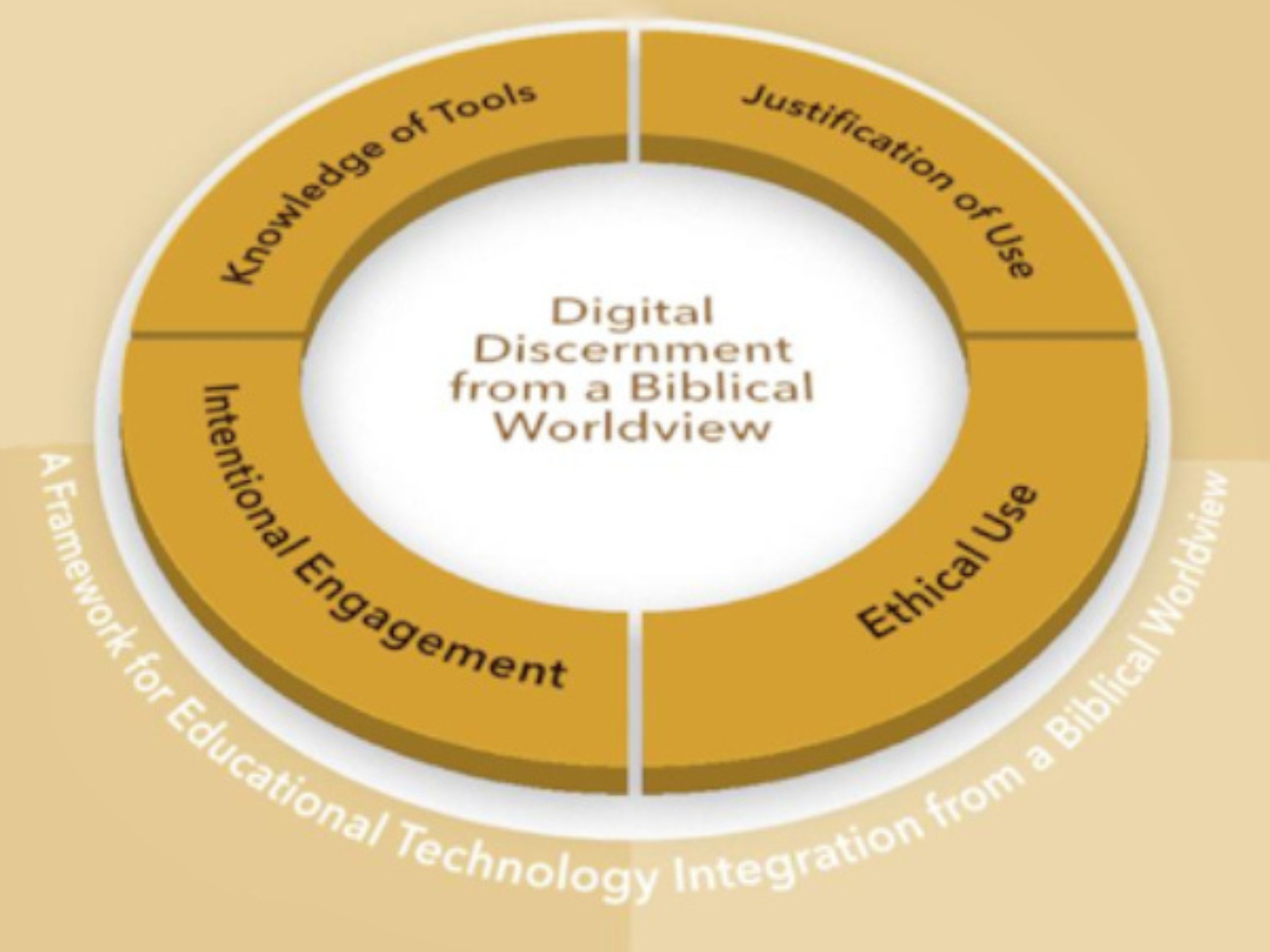
“We have four quadrants that we talk about when we use the framework. To do digital discernment from a biblical worldview, we look at knowledge of tools, justification of use, intentional engagement, and also ethical use. Each category of our framework has a general question, then we have a foundational question, and then we have a community question, and then we have a theological question … we really want teachers to be able to discern whether to use [a technology] or not to use it. So it’s all really rooted in the why.”
The group went on to publish research findings based on their framework in the peer reviewed International Christian Community of Teacher Educators Journal twice, and currently have a book in the works with Kendall Hunt Publishing. While their presentations have been successful at the ICCTE conferences, the team’s outreach garnered a new level after Mack attended an Association of Christian Schools International (ASCI) Flourish conference in Florida in winter of 2025.
“When I was there, ACSI had a book. It was a little 6x9 book called ACSI Insights on Artificial Intelligence and Technology. And I said, ‘Oh my goodness, that’s awesome.’ They were passing out free copies. And as I flipped through it, I saw things like the SAMR model and so many of the things that [Schoenleber and King and I] had talked about integrating or using, and I thought, ‘You know what’s lacking is [our] framework. [Our] framework would actually fit into this book so well. And I emailed ACSI and said, ‘I’m just wondering if you’re going to create another edition of this book, because we have a framework that I think would complement the next edition if you’re going to do one.”
But ACSI responded that they were not going to do another edition of the book. They were, however, interested in creating an online program.
The first time Mack, Schoenleber, and King met in person, they jotted an idea on a napkin. The last time they most recently met together, it was to take that idea onto one of the most modern forms of media available for one of the widest outreaches possible.
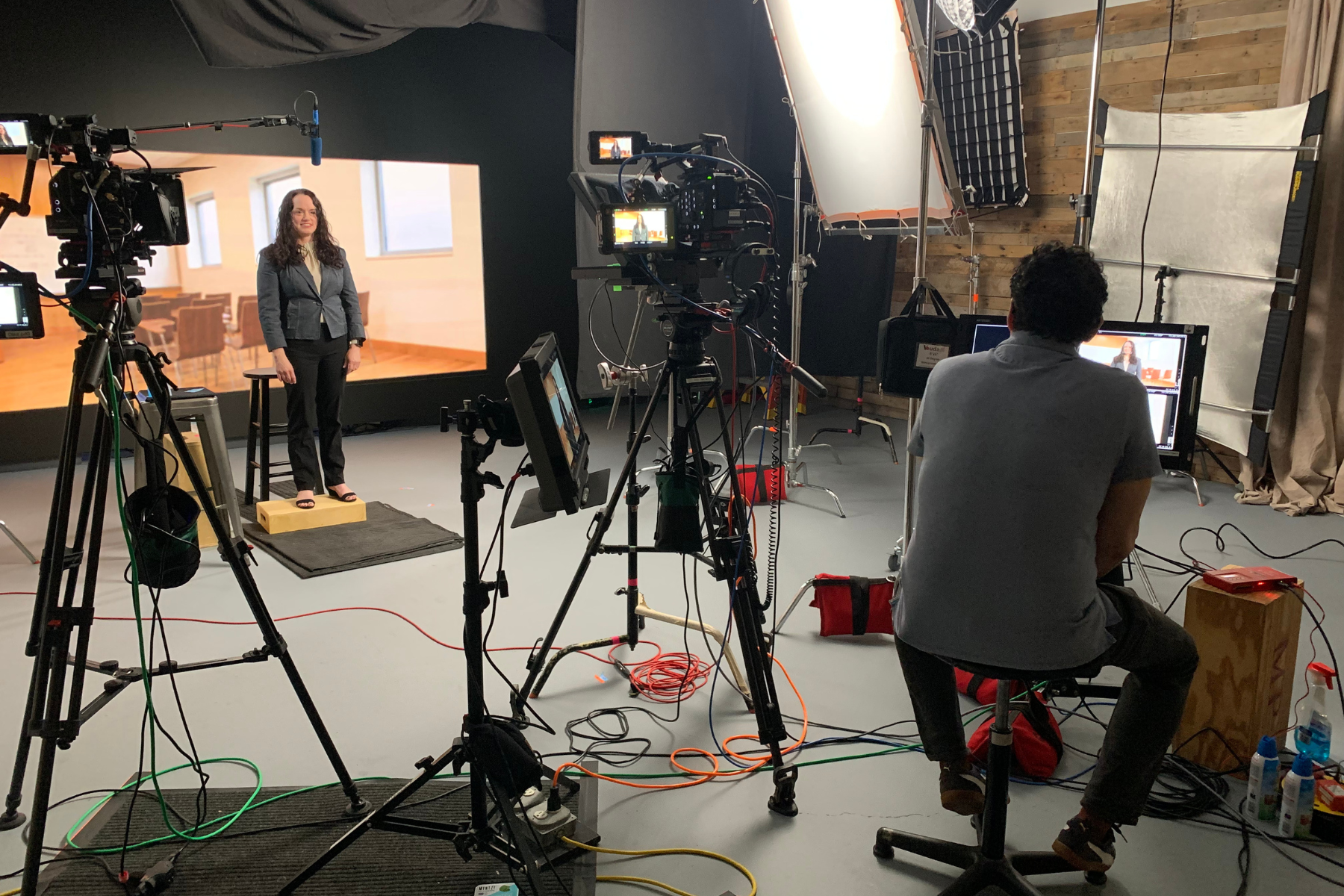
Mack and her colleagues flew to Chicago in April 2026 to be filmed by Wonderkind Studios to create recordings for ACSI’s online professional development program that is now available for Christian K-12 teachers, education leaders, and homeschooling parents as a continuing education unit, available to any educator internationally.
In May 2026, the team presented a 3-part general session presentation series at the 2026 ICCTE Conference in San Diego at Point Loma Nazarene University.
Mack shares, “I think, What if Jesus were walking around right now? Would He have an iPhone or would He have an Android? I don’t know. But I would think that if it helped Him to get to know His people and reach them, He would probably use it. But I would imagine that He would also likely have times where He would be away from it so that He could still be still and quiet. I think that He would be a really good example of using [technology] for good.
"And I think [educators are] going to need to keep their learners at the center of it because, I mean, that’s what Jesus did, right? He’s making instructional decisions based upon His audience. He doesn’t use the same teaching methods in all of His lessons; we shouldn’t be using the same technology in all of our lessons. We need to be thinking about what are we teaching, who are we teaching, and then consider what tool we may or may not use to accomplish that.
“For the [online professional development] course, I want [educators] to leave feeling more confident in their ability to communicate — not only to parents, but to other teachers, to administrators, about why they’re using [a] technology or not.”
In the group’s previous research and experience teaching their digital discernment from a biblical worldview framework, attendees left with just that: knowledge in how to ask the most perceptive questions of technologies and the ability to explain their decisions.
Geneva students have been amongst the forefront learners of this Christian technology approach since Mack began teaching Educational Technology (EDU 290) in 2021, and those students have demonstrated that cutting edge to their peers.
“[Students] leave feeling confident that they don’t know everything, which is probably the most accurate thing you can say about using technology, because it’s always changing, but [students] feel less afraid to learn about something and ask the deeper questions: Is [a technology] really worth it? What’s it going to do for your students? And then being able to justify that and explain why you really need it is important.”
This is the expertise Geneva education major students have benefitted from for the last half-decade, which will now be available to anyone in the world.
That’s remarkable for an idea that began as an inkling on a napkin.
The Geneva Story publishes content from a variety of contributors across the Geneva College community. The perspectives, experiences, and conclusions expressed in this content are those of the individual authors and do not necessarily reflect the official views of Geneva College, its leadership, or its editorial staff.

Misty Mator
- Misty Mator '24 is a digital storyteller at Geneva College.
- View author





Recent Articles
The Trinity Psalter Hymnal: A Ministry of Song
A Closer Look: How Do I Know What College is Right for Me?
Faith-Life Integration and the Lord of Excellence (Vol. 1, Issue 1, Fall 2026)
More Than a Competition: How Covey Cup Builds Community at Geneva
Geneva College's 2026 Distinguished Service Awardees
A Closer Look: Does College Make Sense in the Age of AI?
Geneva College's 2026 Alumni Awardees
A Geneva Landmark: 95 Years of McCartney Library
Geneva College's 2026 Young Alumni Awardees
Wargo Hired to Take over Cross Country and Track and Field