

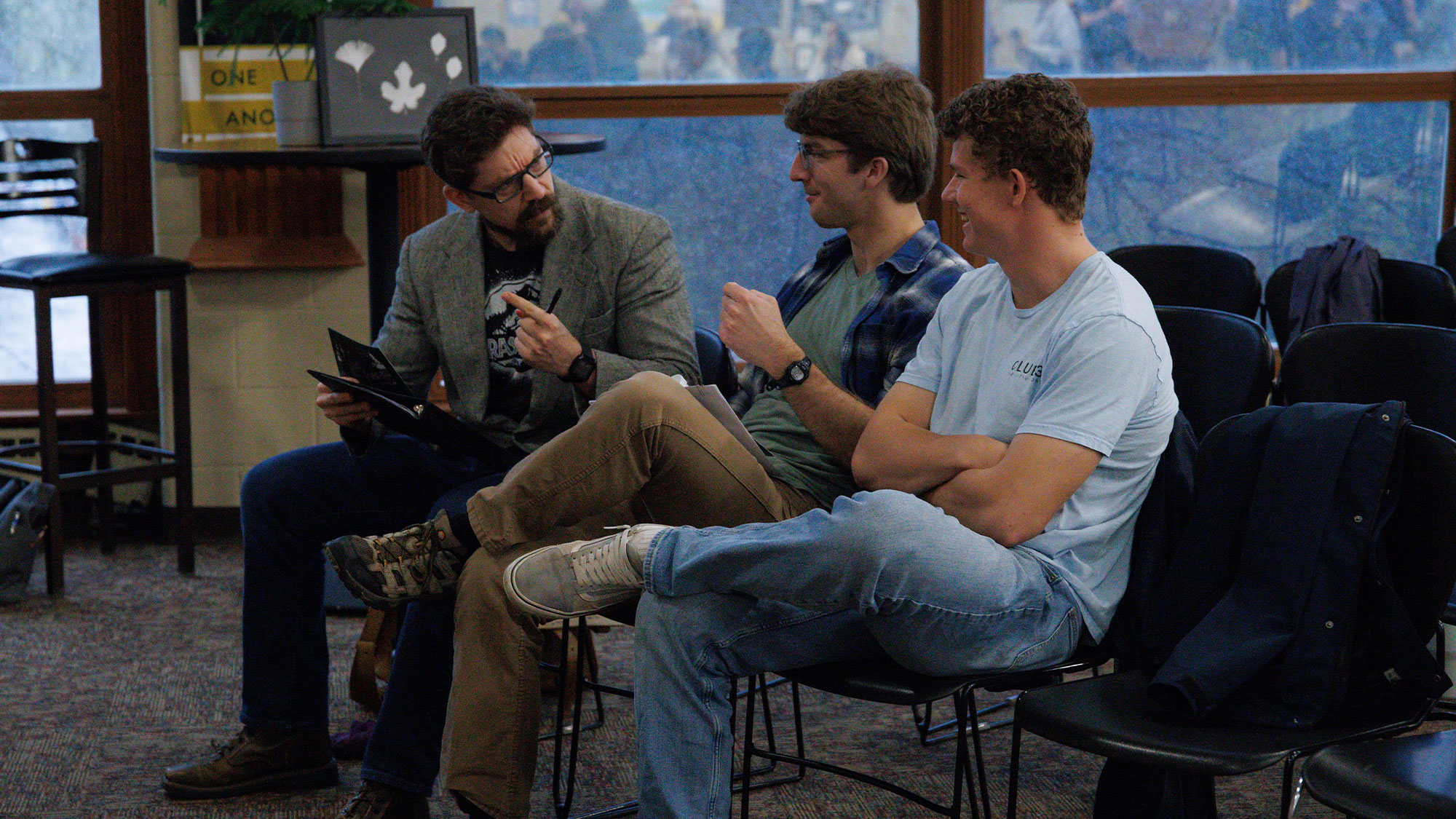
There is something about getting up at 4:15 a.m. to climb into a college van with two of your professors and seven other students and driving five and half hours across the country that makes a day special. In the spring of 2026, I had the privilege of doing this, as part of a group of Geneva people who visited Calvin College in Grand Rapids, Michigan, for the biannual Festival for Faith and Writing.
It was a little intimidating at first. Despite it being my senior year of college, this was the first academic conference I had attended. But the anxiety faded soon enough and was replaced by, more than anything else, gratitude. Here I found myself in the middle of half a thousand people who all cared about writing, who were all in some way trying to pursue the kind of writing life that I talked about in my English classes at Geneva. The first night of the three-day trip, we sat together in the middle of a crowded gymnasium and listened to Robin Wall Kimmerer argue that the place of the nature writer is to call people to remember and to notice, to pay attention to the world around them.
The theme of attention has been a running one for me that semester. In an independent study I had been doing on the idea of beauty, we talked over and over about seeing, not only looking, but actually learning to pay enough attention to God’s creation to see the beauty in it. The second day, we listened to Ross Gay read essays that read like poetry and poetry that could have been an essay on paying attention to the world around us.
The third day, we heard a theologian argue for the place of poetry in the church and quote Simone Weil, who said, “Attention is the rarest and purest form of generosity.” All throughout the conference I was called to pay the rarest and purest form of generosity to others. And this has only extended what I was already learning to do at Geneva.
One of the things that struck me was watching my professors and fellow students in an environment outside of Geneva, and realizing that they all remained very much the same people they were at Geneva. It demonstrated for me what integrating faith and education — and faith and writing — really is all about: education and writing spring from and are grounded in faith. When we write, we start by paying attention to something because we belief that it is worthy of our attention. Every sentence written is an act of faith and hope that what we write means something. It may not mean much, but every word we write expresses our belief that we are doing something that matters. This is what roots us.
This was demonstrated by my professors and fellow students at Calvin. Place and situation changed, but the words and beliefs did not. As I prepared to leave Geneva, I knew my place and situation would change, but that the words I believe will not. Faith and writing will remain integrated. How could they be separated?
The Geneva Story publishes content from a variety of contributors across the Geneva College community. The perspectives, experiences, and conclusions expressed in this content are those of the individual authors and do not necessarily reflect the official views of Geneva College, its leadership, or its editorial staff.
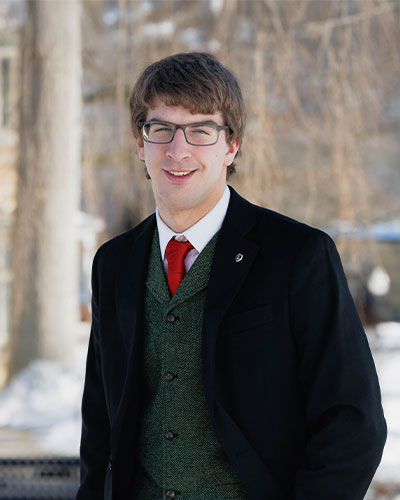
Luke MacKenzie
- Luke MacKenzie is an English literature and writing student at Geneva College and a writing intern in the Office of Marketing and Communication.
- View author



Recent Articles
Cammie Crouse: Becoming a Beaver Falls Police Officer
Storyteller Sarah Brady to Present at Geneva
Lindsay Courteau Named Vice President of Strategic Partnerships and Government Relations
Attention as an Act of Faith
Faculty Awards Presented at the 2026 Academic Convocation
Ashley Heinlein Joins Geneva Faculty as Instructor of Education
Encouraging Whole-Person Student Development at Geneva
Volleyball Coach Wendy Smith Announces Retirement at End of 2026 Season
6 Vital Connections for Back to College
Geneva’s Education Department Gains Assistant Professor Noah Stachelek